Arriving in Ho Chi Minh City was an exhilarating experience. After a seamless hour and a half flight with VietJetair from Da Nang airport, we landed in this vibrant metropolis. For those who prefer other options, Bamboo Airways and Vietnam Airlines are also available for this route.
From the airport, we hopped into a cab that whisked us to the Sheraton Hotel, nestled in the heart of Ho Chi Minh City’s iconic Dong Khoi Street. Known as the city’s most famous street, Dong Khoi offered a perfect blend of business and entertainment, making it an ideal location to explore the wonders of Ho Chi Minh City. The strategic placement of our hotel ensured that we were just steps away from bustling markets, historical landmarks, and a plethora of dining and entertainment options.
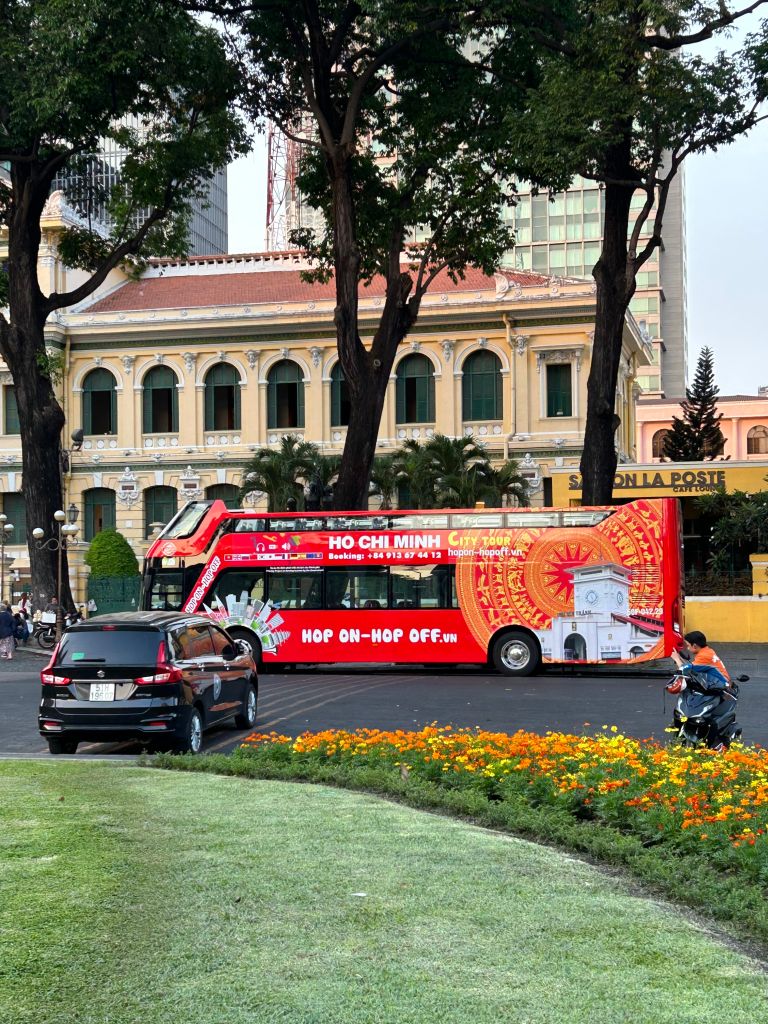
Our journey in this dynamic city was about to unfold. With high spirits and a sense of anticipation, we set out to discover the charm and energy that this extraordinary city had to offer.
Notre Dame Cathedral & Buu Dien
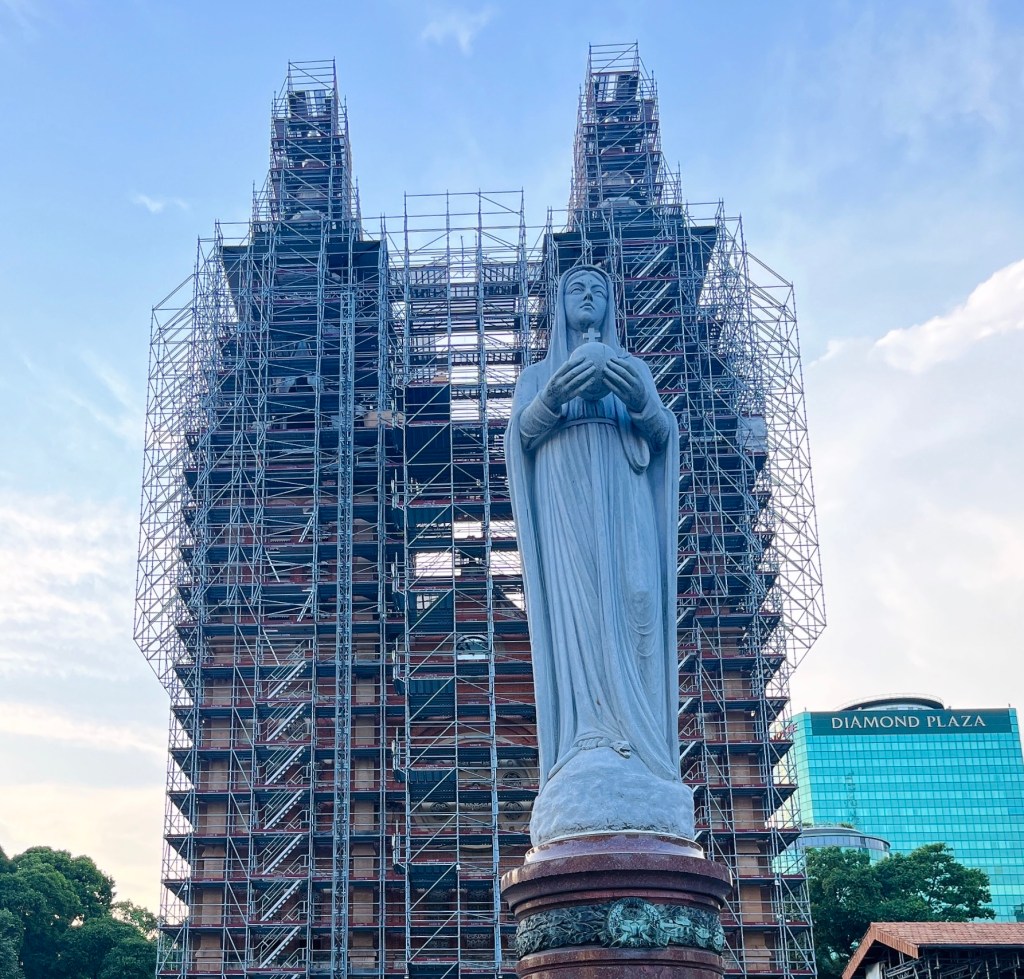
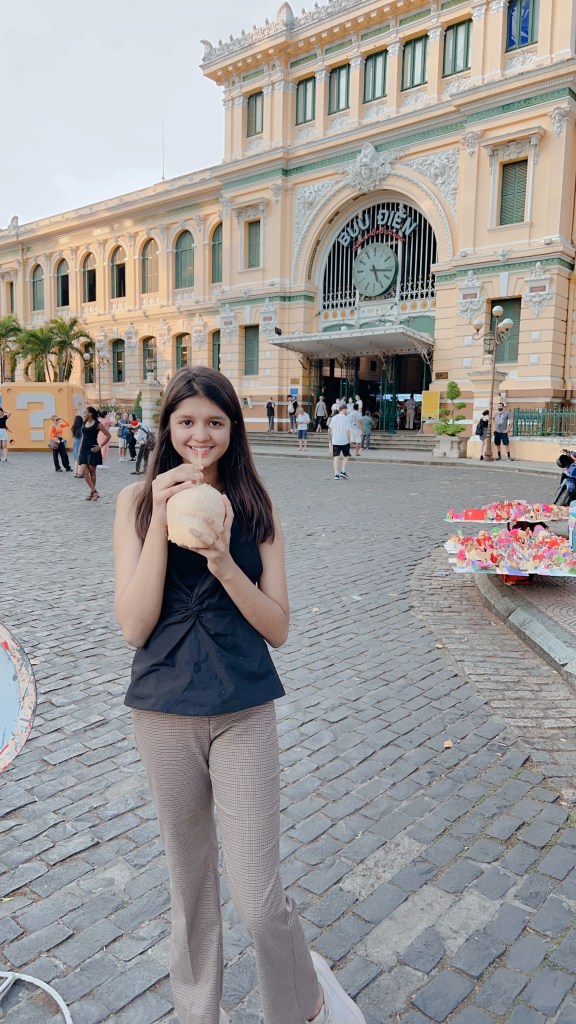
Upon arriving in Ho Chi Minh, we wasted no time and headed straight to District 1 to visit the Notre Dame Basilica. As someone who recently visited the Notre Dame in Paris, seeing its counterpart in Vietnam was a nostalgic experience, showcasing the enduring charm of French architecture. Although the Notre Dame was closed for renovations, we joined other visitors in admiring its beauty from outside. Right nearby, the Buu Dien (Post Office) captivated us with its grand interiors, and we couldn’t resist browsing the shop that offered unique Vietnamese souvenirs, including old coins, notes, stamps, and war history memorabilia.
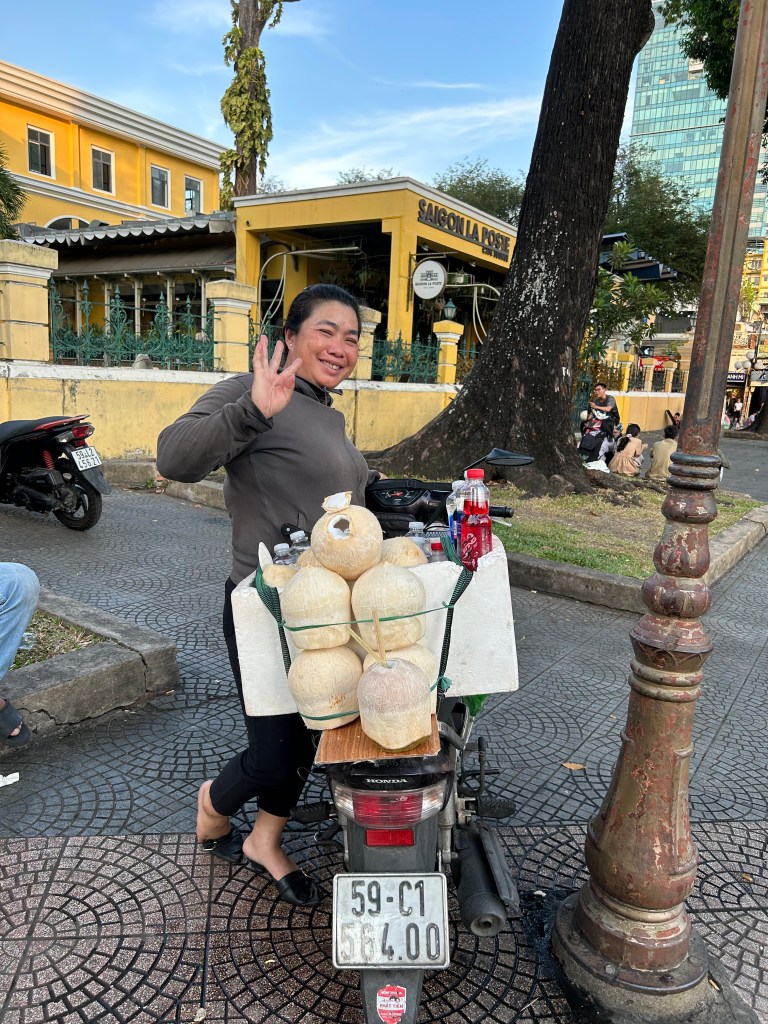
After exploring indoors, we stepped outside and treated ourselves to a refreshing coconut drink. The coconut water was abundant and hydrating, though slightly less sweet compared to what we are accustomed to in India.
District 1 High-End Shopping
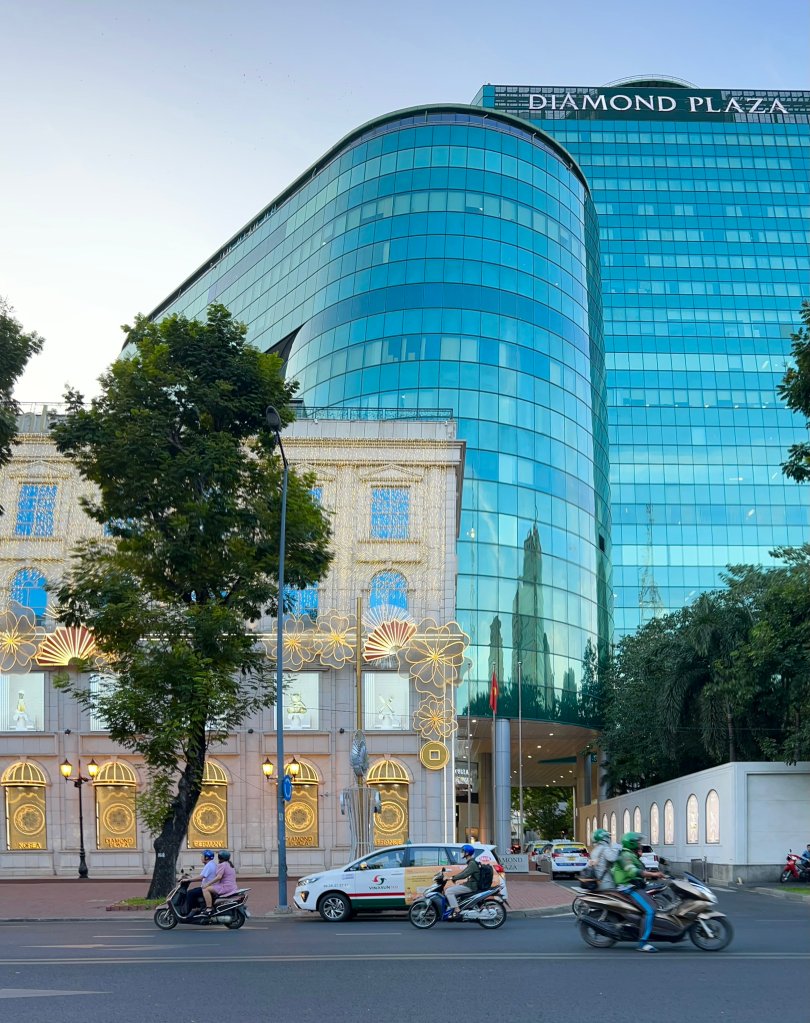
District 1 impressed us with its proximity to our hotel and, and we were thrilled to discover an array of high-end shopping malls like Lotte Departmental Store in Diamond Plaza, Parksons and Vincom Centre. You can also find independent stores of brands like Dior, Bulgari and Chanel dotted all over District 1.
Cu Chi Tunnels
The next morning, we embarked on a journey to the legendary Cu Chi Tunnels, a place that had captured my imagination through countless internet stories and images.
The Củ Chi Tunnels, stretches for 121 kms and have been well-preserved by the Vietnamese government. There are two tunnel display sites: Ben Dinh and Ben Duoc. At the Ben Duoc site, you can explore a part of the original tunnel system, while the Ben Dinh site, situated closer to Saigon, features tunnel reconstructions, some of which have been enlarged to cater to tourists.
With some research, we arranged for a cab to take us to the tunnels, and although the journey took a bit longer due to traffic, we opted for the less crowded later entry gate, Ben Duoc.
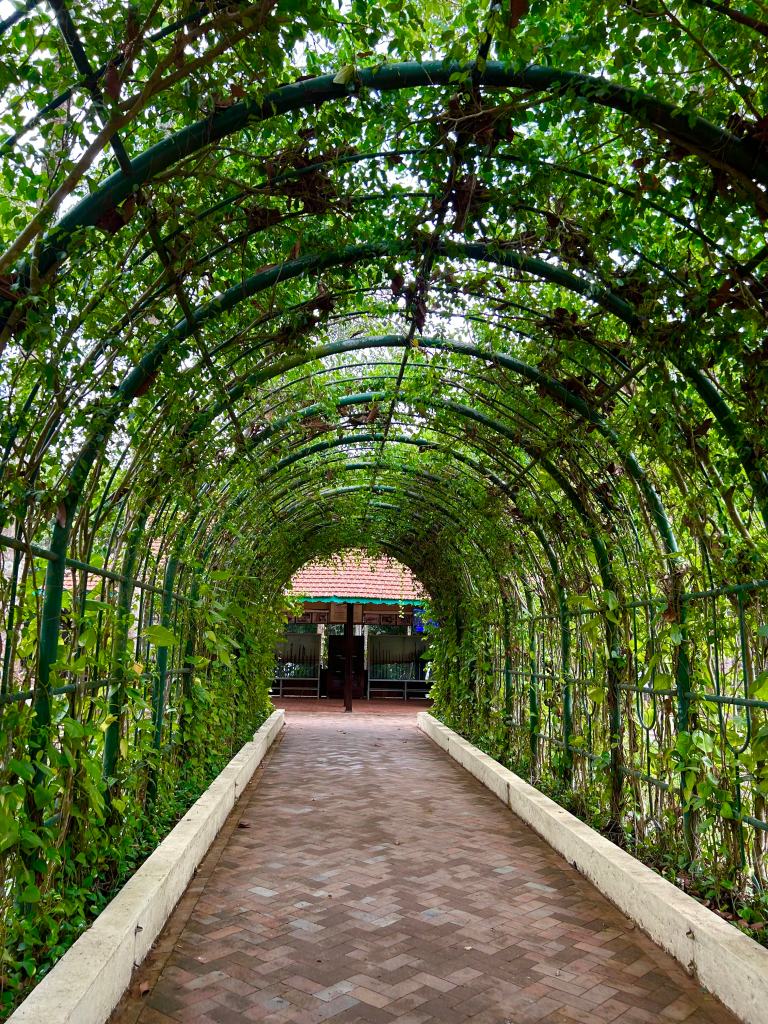
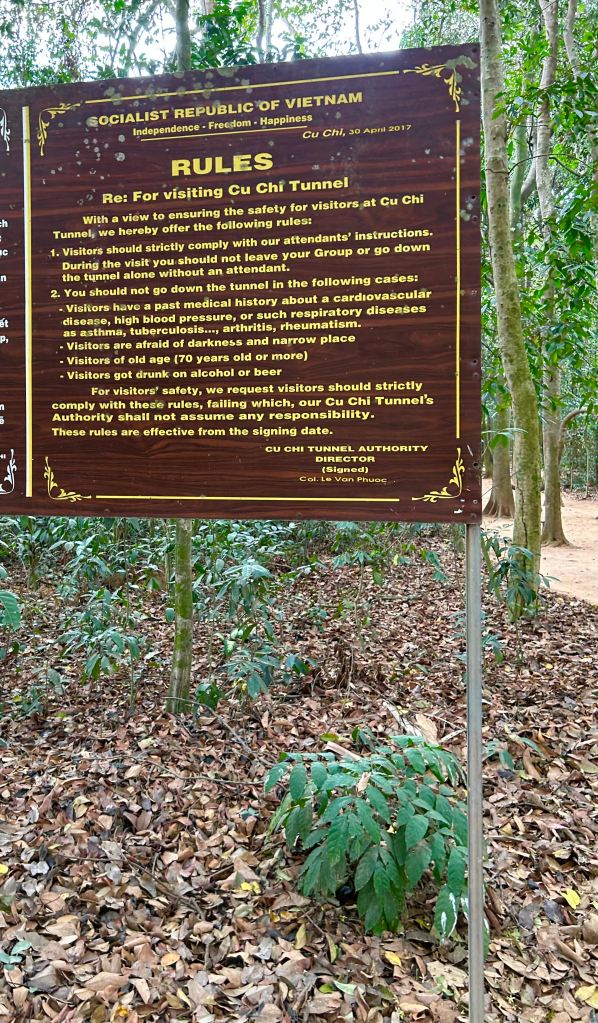
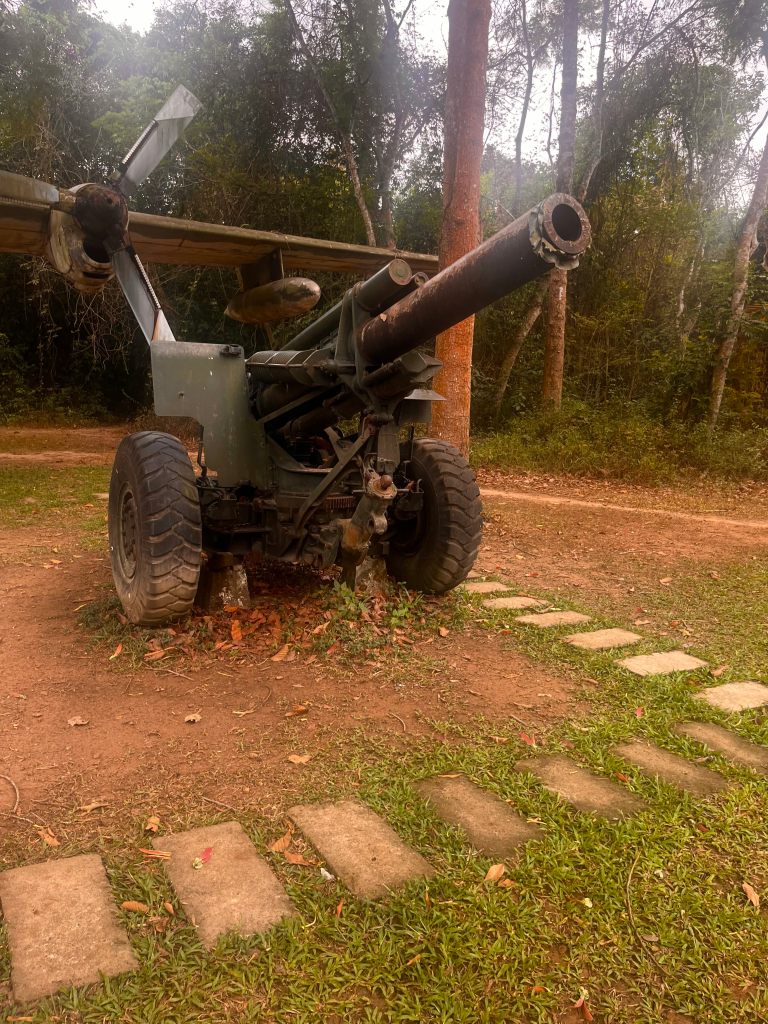
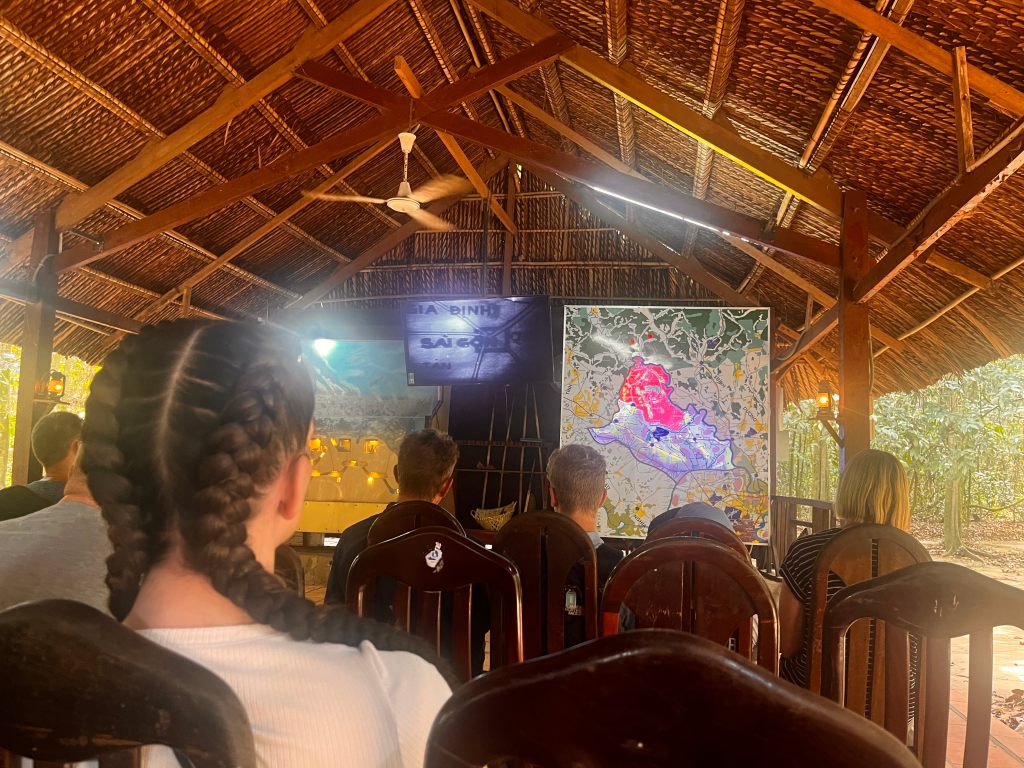
Upon arrival, we saw a war memorial park which also displays a plane from the war times. Following which we were taken to watch a documentary about the Vietnam War and their struggle, though the quality of sound and visuals was somewhat lacking. For history enthusiasts, it’s best to come prepared with prior knowledge.
Our guide, provided along with the ticket, then led us through the pathways to one of the tunnels. As a family of tall individuals, we had to bend and squeeze our way through the low tunnels which had low-power lights installed in them.

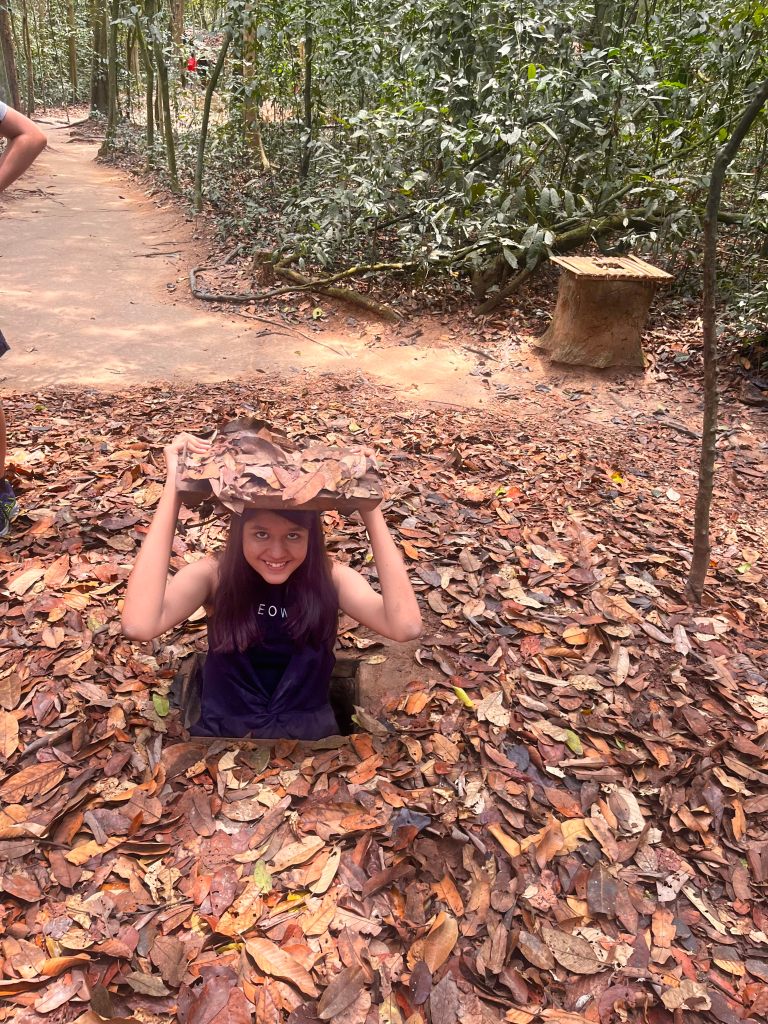
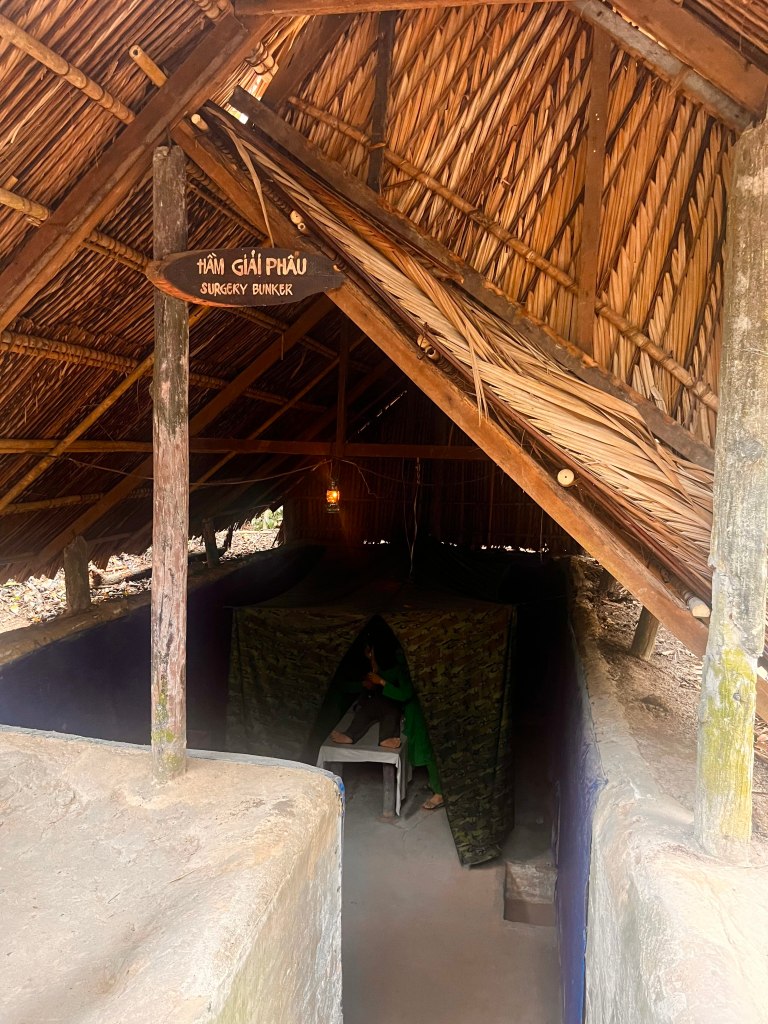
I won’t deny, it did evoke a sense of claustrophobia but the experience of being inside the tunnels made us contemplate the sacrifices made by the Vietnamese who lived and fought in such challenging conditions. The guide strategically led us to the tunnels, ensuring that each one we explored was more challenging than the previous. At last we visited a tunnel displaying a bed used for the sick and surgical instruments, leaving us in awe of their resilience. Additionally, we saw the various types of booby traps that were used during the war.
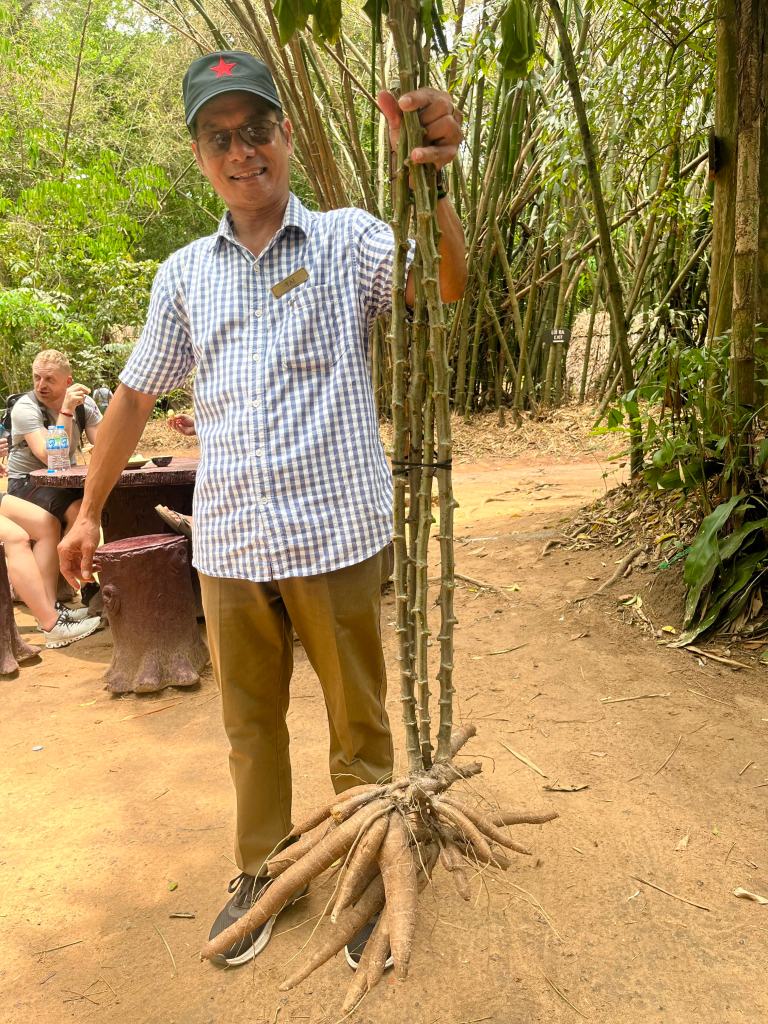
After several tunnel explorations, our guide treated us to tapioca root and cooked tapioca, which served as the staple food for the Vietnamese during the war, emphasizing the hardships they endured.
The visit to Cu Chi Tunnels was a profound and eye-opening experience, allowing us to glimpse the strength and perseverance of the Vietnamese people during those tumultuous times. It was a testament to their courage and determination in the face of adversity.
Cho Ben Thanh Market
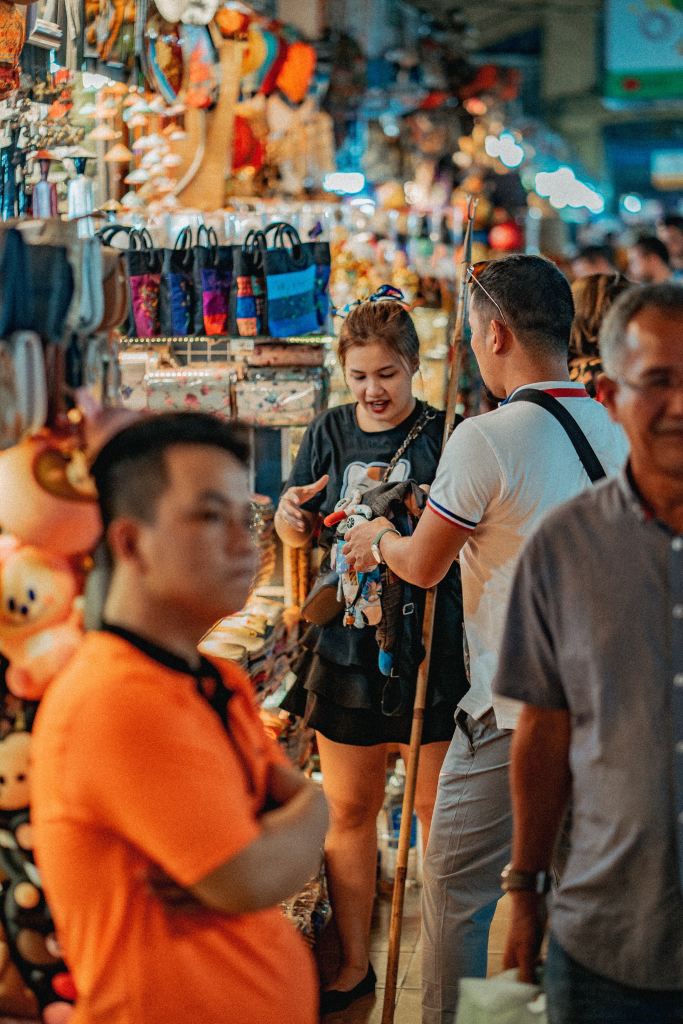
After our enriching Cu Chi Tunnel excursion, we took some time to relax at the hotel before embarking on an exciting adventure to explore Cho Ben Thanh Market in the heart of Ho Chi Minh City. This iconic market, located in District 1, holds a special place in the city’s history and culture. As we strolled through the vibrant aisles, we were delighted to find a wide array of products, from fresh produce to colorful handicrafts and unique souvenirs.
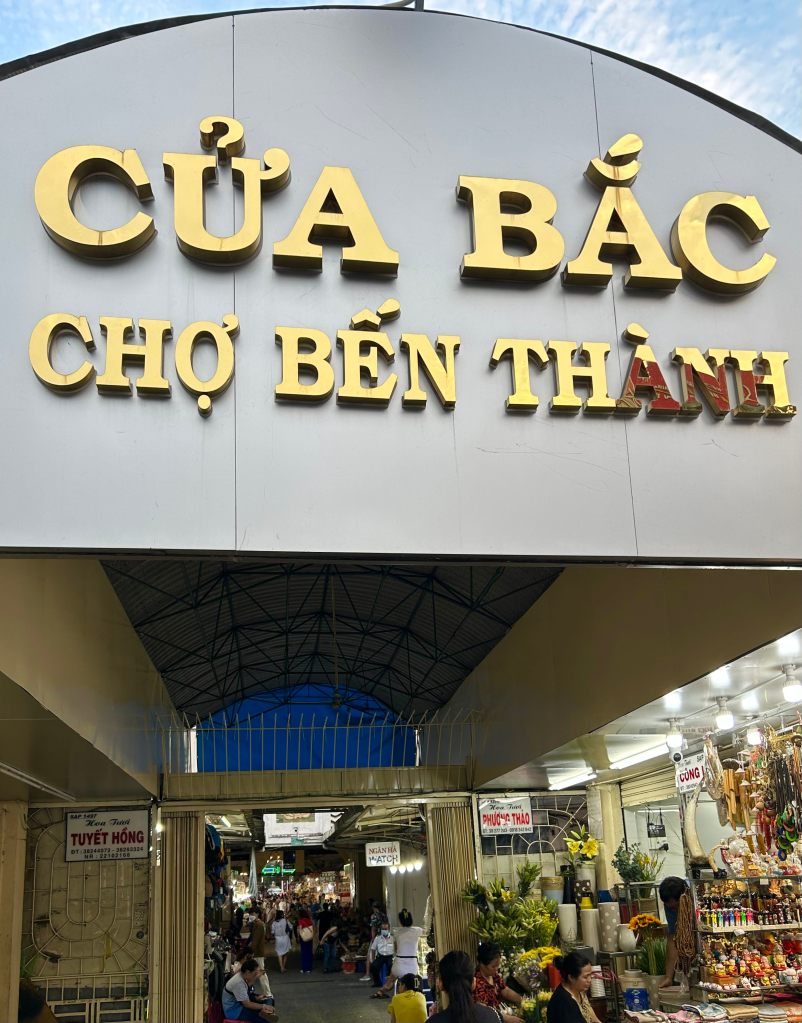
The market also offered a captivating variety of Vietnamese coffee, including some made from cat poop… strange, isn’t it? Cat poop coffee, also known as “weasel coffee” or “kopi luwak,” is a unique and expensive coffee variety that originates from Indonesia, but it is also found in Vietnam. It is made from coffee beans eaten and excreted by the Asian palm civet. The beans undergo fermentation during digestion. After being excreted, the beans are collected from the feces of the civet. They are then thoroughly washed, dried, and roasted to create coffee with a distinct flavour profile. It results in a smoother, less bitter taste with hints of chocolate and caramel. However, the production process has been controversial due to animal welfare concerns.
There were an assortment of spices, handcrafted bags, imported clothes, phone covers, ceramics with intricate designs, fabrics, lanterns, and more. Bargaining with the friendly vendors added an extra touch of fun to our shopping journey. The market is primarily indoors until 7 pm, and as the evening approached, a bustling night market emerged just outside, featuring the same shops that were inside, allowing us to continue exploring the vibrant street scene.
Mekong Delta
On the following day, we set out to explore the Mekong Delta. While it’s possible to visit both the Cu Chi Tunnels and Mekong in one day, we believed visiting them on separate days would allow us to maintain our energy levels and fully appreciate each destination. Additionally, since Mekong and Cu Chi are located on opposite sides of Ho Chi Minh City, it made more sense.
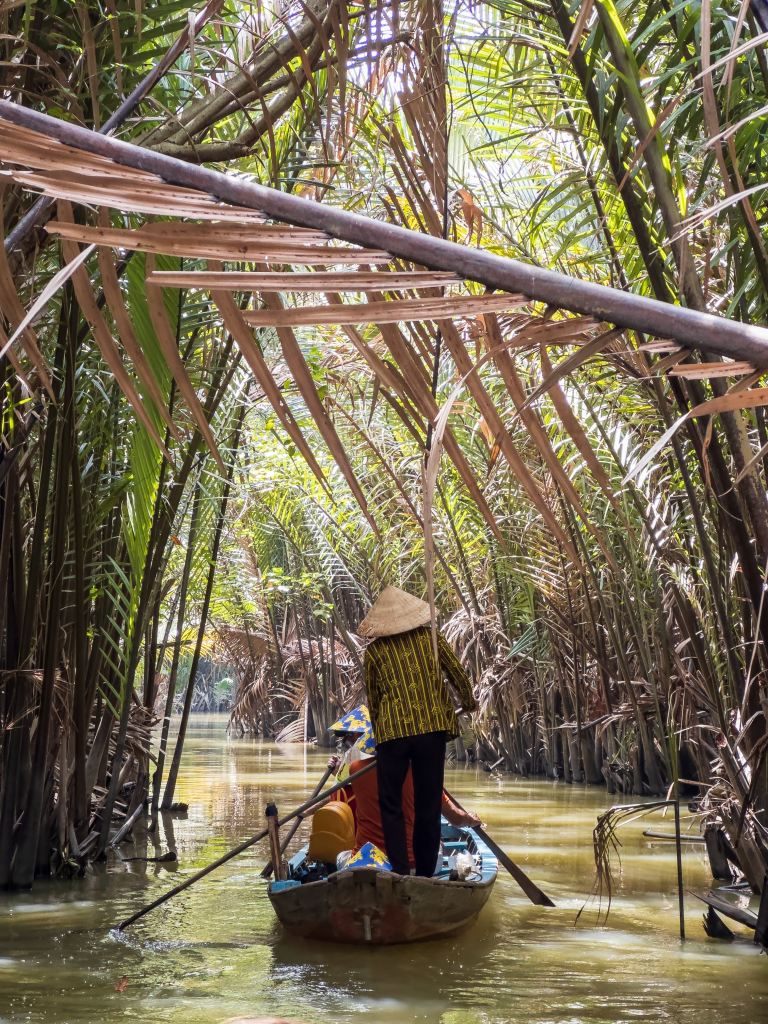
The Mekong Delta covers an area of approximately 40,000 square kilometers in southwestern Vietnam. It is formed by the Mekong River and its various tributaries, making it one of the largest and most fertile river deltas in the world. It is often referred to as the “Rice Bowl of Vietnam” because it contributes a significant portion of Vietnam’s rice output. It offers a range of tourist attractions, including boat tours, floating markets, homestays, and eco-tourism activities. The region is known for its abundant fruit orchards, producing a wide variety of tropical fruits such as mangoes, durians, coconuts, and dragon fruits.
We had a great time exploring the intricate network of canals and floating markets. It painted a vivid picture of local life and traditions. From trying our hand at rowing traditional boats to savoring the flavors of fresh fruits at the floating markets, our every moment in Mekong Delta was brimming with authentic cultural experiences. We couldn’t help but notice that the Ba Loc Coconut farm of Hoi An and the Mekong Delta shared striking similarities with its with vast expanses of lush greenery and serene waterways.
Union Square & Ho Chi Minh City Hall
After our Mekong Delta adventure, we returned to the hotel feeling a bit drained. A little rest, and we were ready to explore Union Square, famously known as Nguyen Hue Walking Street. Located in District 1, just a walking distance from our hotel, this pedestrian-friendly boulevard is a favorite gathering spot for both locals and tourists. The square’s lush landscaping with trees, flowers, and sculptures adds to its charm. It’s a lively hub filled with cafes, restaurants, shops, and cultural performances, making it an exciting and dynamic place to experience.
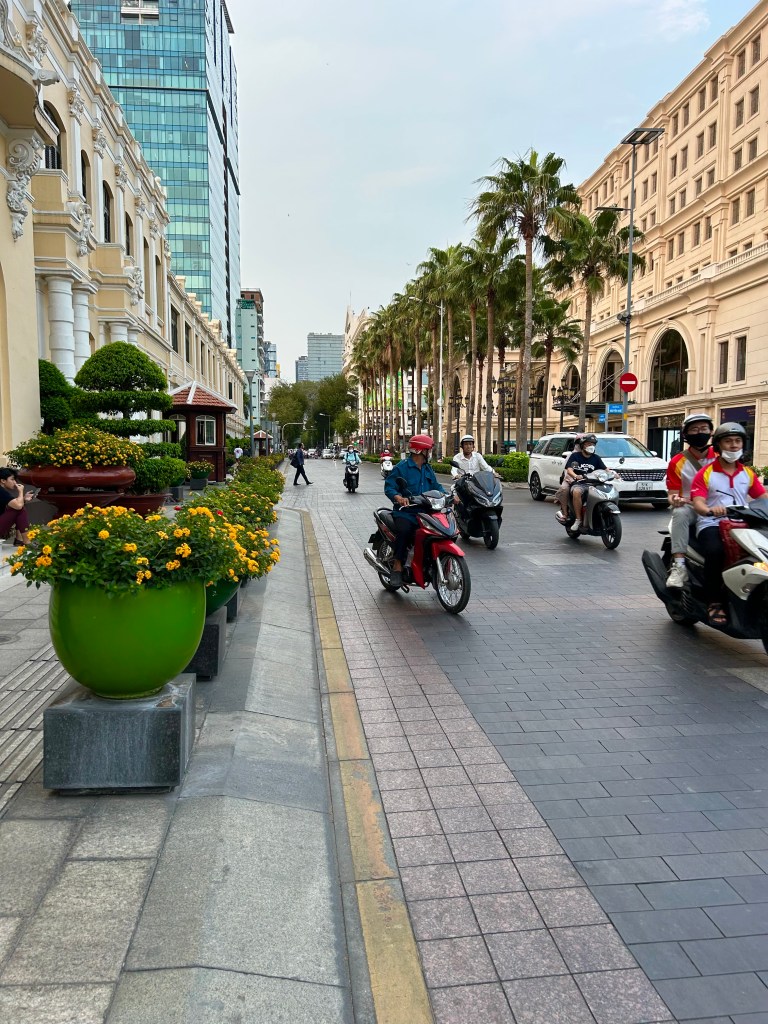
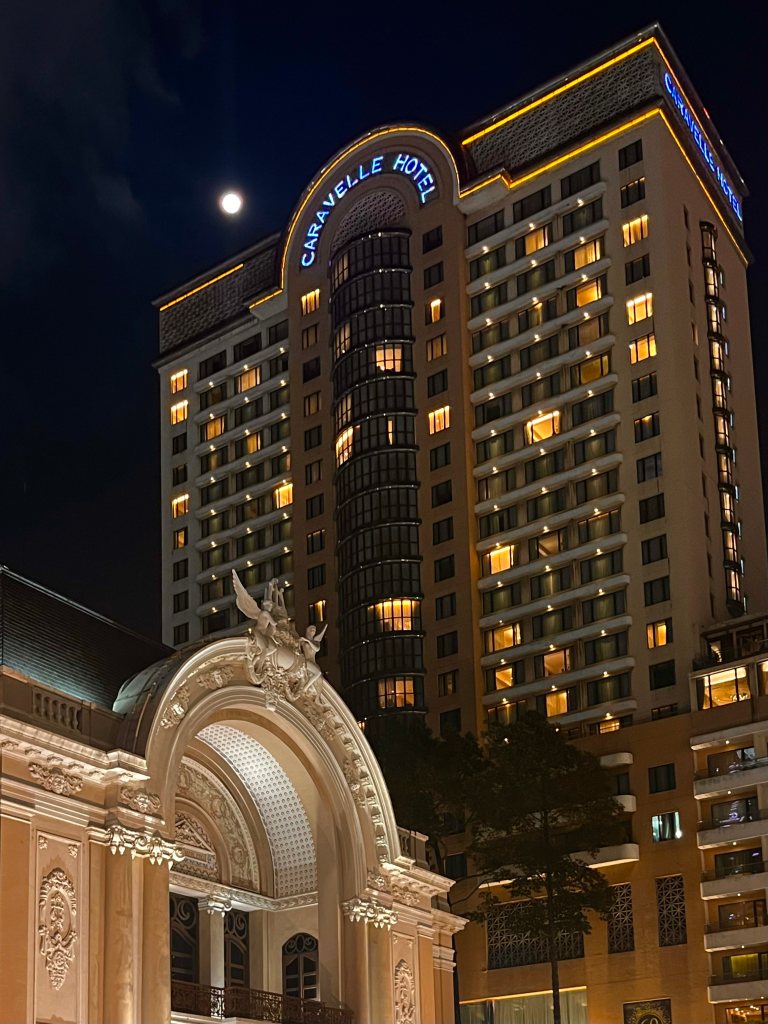
Also situated in District 1,is the Ho Chi Minh City Hall, a stunning example of French colonial architecture. Built between 1902 and 1908, during the French colonial era, the building once served as the administrative headquarters of the French colonial government. Today, it houses the People’s Committee of Ho Chi Minh City, blending history with modern vibrancy in this bustling district.

Bui Vui Street
On our last night in Ho Chi Minh City, we decided to visit Bui Vui Street, also known as Beer Street, located in the heart of District 1. It’s a lively and popular nightlife destination, attracting both young locals and tourists seeking a great time. The street is bustling with activity, filled with bars, pubs, and restaurants along its sidewalks, offering live music performances, delicious street food, and vibrant neon lights.
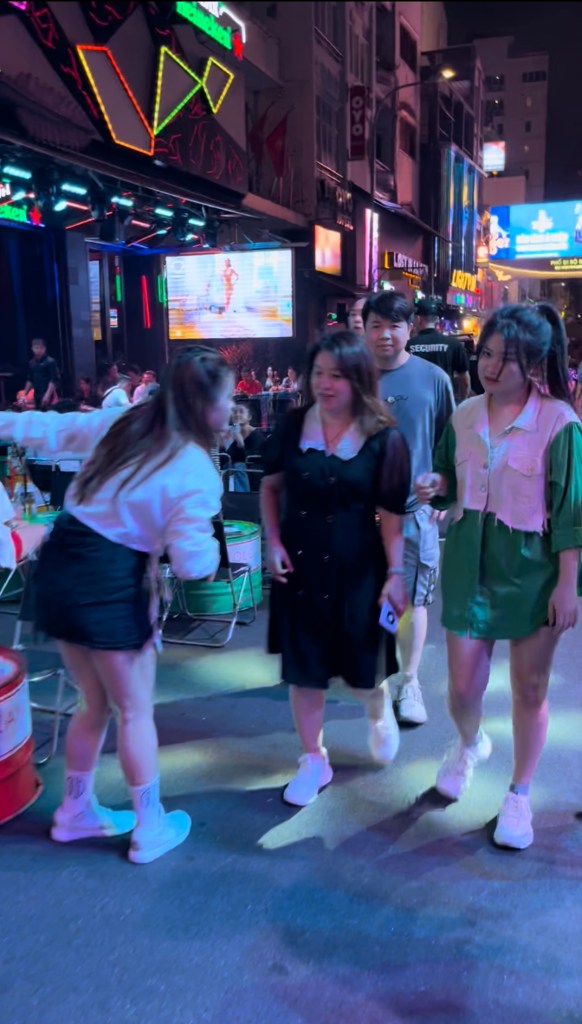
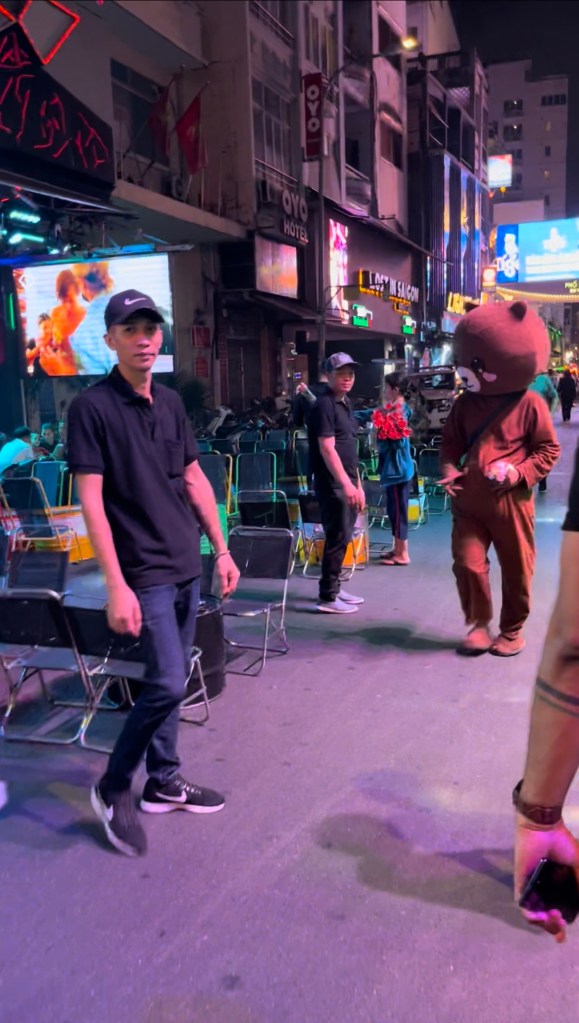
While I enjoyed the energetic atmosphere, I couldn’t help but feel sorry for the women dancing in scanty clothings for a living. Despite the loud environment where conversation was a challenge, we had a memorable time. Eventually, we returned to the area near our hotel and decided to treat ourselves to a relaxing body massage before our evening flight. Vietnam, like Thailand, is renowned for its spa and wellness offerings deeply rooted in ancient traditions. During the hour-long massage, we had the opportunity to connect with the local masseuses and learn about Vietnamese traditions and life in Vietnam.
I believe that talking to locals is crucial while visiting a country, as it helps us understand that despite our differences, we all share similar thoughts and emotions. Although I’m naturally a bit shy and it takes me a while to open up, I am learning to engage more with others. My dad, on the other hand, loves interacting with people everywhere we go. He strikes up conversations with taxi drivers, shopkeepers, hotel staff, restaurant owners, and even the masseuses. It was through these interactions that we discovered how much the Vietnamese are fascinated by Indian shows and songs. One of them mentioned watching ‘Balika Vadhu’ for ten long years! They also admired the elegant way Indian women wear the ‘sari.’ Additionally, they shared that many Vietnamese Buddhists visit India once in their lifetime because of Bodhgaya, a significant spiritual site for their beliefs. This delightful cultural exchange added to the charm of our trip, leaving us with beautiful memories of our time in Vietnam.
Thank you for joining me on this unforgettable journey from Hanoi to Ho Chi Minh City. Vietnam never fails to enchant, whether it’s savoring local delicacies, immersing in history, or indulging in spa bliss, it has something to captivate every traveler’s heart. I hope my experiences inspire you to explore this beautiful country and create your own cherished memories.
Safe travels, and until we meet again!

 MOIMEHR